
Early Stage Skin Cancer Symptoms
Skin cancer is one of the most common types of cancer worldwide, and early detection plays a major role in successful treatment. Many people ignore the first warning signs because they may appear harmless or painless in the beginning. However, recognizing early stage skin cancer symptoms can help prevent complications and improve recovery outcomes.
At Healpark Clinics, we believe awareness and timely diagnosis are essential for protecting your skin health. This guide explains the early symptoms of skin cancer, risk factors, different types, prevention methods, and treatment options.
What is Skin Cancer?
Skin cancer occurs when abnormal skin cells begin to grow uncontrollably. It commonly develops in areas exposed to sunlight, but it can also appear on parts of the body that receive little sun exposure.
The main cause of skin cancer is prolonged exposure to ultraviolet (UV) rays from the sun or tanning devices. Skin cancer can affect people of all ages, though the risk increases with age and repeated sun exposure.
There are three major types of skin cancer:
- Basal Cell Carcinoma (BCC)
- Squamous Cell Carcinoma (SCC)
- Melanoma
Among these, melanoma is considered the most aggressive form, while BCC and SCC are more common and usually easier to treat when detected early.
Why Early Detection Matters
Identifying early stage skin cancer symptoms can significantly improve treatment success rates. In many cases, skin cancer detected in the early stage can be treated effectively with minimally invasive procedures.
Ignoring suspicious skin changes may allow cancer cells to spread deeper into the skin or other organs. Early diagnosis helps:
- Reduce treatment complexity
- Improve survival rates
- Minimize scarring or tissue damage
- Prevent cancer spread
- Lower treatment costs
Regular skin checks and medical consultations are important for early identification.
Common Early Stage Skin Cancer Symptoms
Understanding the warning signs is the first step toward timely treatment. Below are some of the most common early stage skin cancer symptoms.
1. New Moles or Skin Growths
One of the earliest signs of skin cancer is the appearance of a new mole, bump, or unusual growth on the skin. These growths may vary in color, shape, or size.
Pay attention if a mole:
- Appears suddenly
- Looks different from surrounding moles
- Continues to grow over time
- Changes texture
New skin growths should always be evaluated by a healthcare professional.
2. Changes in Existing Moles
Changes in an existing mole can indicate melanoma or other skin cancers.
Doctors often recommend following the ABCDE rule:
A – Asymmetry
One half of the mole looks different from the other.
B – Border
Edges become irregular, blurred, or uneven.
C – Color
The mole develops multiple shades such as brown, black, red, white, or blue.
D – Diameter
The mole becomes larger than 6 mm.
E – Evolving
The mole changes in size, shape, color, or texture.
Any evolving mole requires immediate medical attention.
3. Persistent Sores That Do Not Heal
A sore that does not heal within a few weeks may be an early symptom of skin cancer. These sores may:
- Bleed easily
- Crust repeatedly
- Ooze fluid
- Reopen after healing
This symptom is especially common in basal cell carcinoma and squamous cell carcinoma.
4. Itching, Tenderness, or Pain
Although early skin cancer may not always cause pain, some lesions can become itchy, sensitive, or tender.
Persistent discomfort in a mole or skin patch should not be ignored.
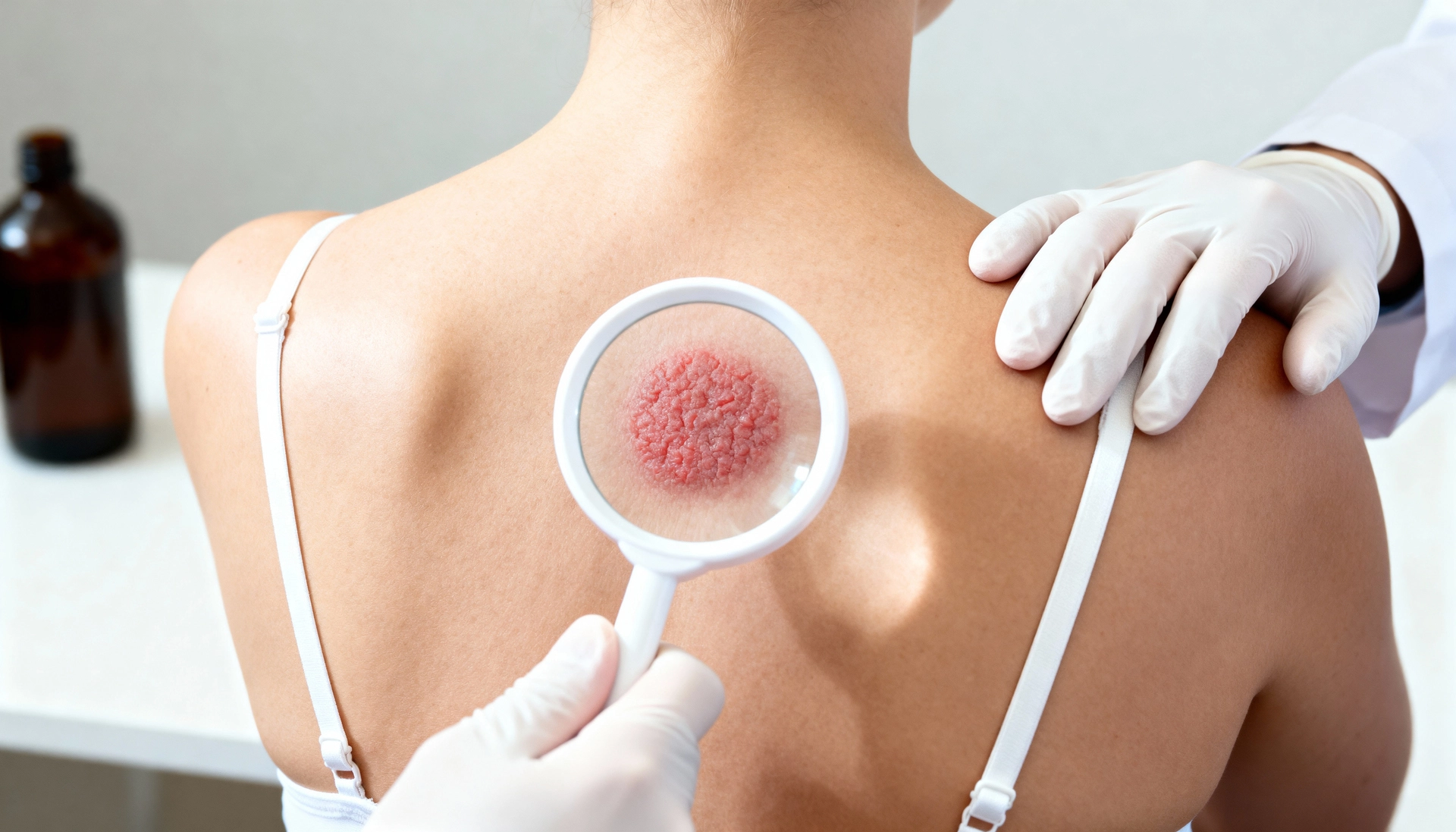
5. Red or Scaly Patches
Squamous cell carcinoma often appears as rough, scaly, or reddish patches on the skin.
These patches may:
- Feel dry or rough
- Become crusty
- Bleed occasionally
- Continue growing slowly
They commonly develop on sun-exposed areas such as the face, scalp, neck, hands, and arms.
6. Pearly or Waxy Bumps
Basal cell carcinoma frequently presents as a shiny or pearly bump.
These bumps may:
- Be pink, white, or skin-colored
- Look translucent
- Develop visible blood vessels
- Bleed easily after minor injury
People often mistake them for harmless pimples or scars.
7. Dark Lesions on the Skin
Melanoma may appear as a dark patch or lesion that changes over time.
It can develop anywhere on the body, including:
- Back
- Legs
- Face
- Arms
- Under nails
- Soles of feet
Dark spots with irregular appearance should always be checked.
8. Unusual Nail Changes
Skin cancer can also develop under the nails.
Warning signs include:
- Dark streaks under nails
- Nail lifting
- Persistent nail discoloration
- Bleeding around the nail
8. Unusual Nail Changes
Skin cancer can also develop under the nails.
Warning signs include:
These symptoms are often overlooked but may indicate melanoma.
Risk Factors for Skin Cancer
Certain factors increase the risk of developing skin cancer.
Excessive Sun Exposure
Repeated exposure to UV rays damages skin cells and increases cancer risk.
Fair Skin
People with lighter skin tones have less melanin protection against UV radiation.
Family History
A family history of skin cancer can increase susceptibility.
History of Sunburns
Severe or repeated sunburns raise the likelihood of skin damage.
Weak Immune System
Individuals with weakened immunity may be more vulnerable.
Tanning Beds
Artificial tanning devices emit harmful UV radiation.
Age
The risk of skin cancer increases with age due to cumulative sun exposure.
Areas Where Skin Cancer Commonly Appears
Skin cancer usually develops in areas frequently exposed to sunlight.
Common locations include:
- Face
- Neck
- Scalp
- Ears
- Lips
- Hands
- Arms
- Back
- Chest
- Legs
However, it can also appear in less exposed regions like the feet, nails, and genital areas.
How Skin Cancer is Diagnosed
Doctors use different methods to confirm skin cancer.
Physical Examination
A dermatologist examines suspicious moles, lesions, or skin patches.
Dermoscopy
Specialized tools help visualize skin structures more clearly.
Skin Biopsy
A small tissue sample is removed and analyzed under a microscope.
Imaging Tests
Advanced imaging may be recommended if cancer spread is suspected.
Early diagnosis allows doctors to begin treatment before the cancer progresses.
Treatment Options for Early Stage Skin Cancer
Treatment depends on the type, size, and location of the cancer.
Surgical Removal
The cancerous tissue is removed along with a margin of healthy skin.
Mohs Surgery
A specialized procedure that removes cancer layer by layer while preserving healthy tissue.
Cryotherapy
Liquid nitrogen freezes and destroys abnormal cells.
Topical Medications
Certain creams help treat superficial skin cancers.
Radiation Therapy
Radiation may be used when surgery is not suitable.
Laser Therapy
Laser treatment can target certain superficial lesions.
Early treatment usually results in better cosmetic outcomes and faster recovery.
How to Prevent Skin Cancer
Prevention is one of the most effective ways to reduce risk.
Use Sunscreen Daily
Apply broad-spectrum sunscreen with SPF 30 or higher.
Avoid Peak Sun Hours
Stay indoors during intense sunlight hours between 10 AM and 4 PM.
Wear Protective Clothing
Use hats, sunglasses, and full-sleeved clothing.
Avoid Tanning Beds
Artificial UV exposure significantly increases skin cancer risk.
Perform Regular Skin Checks
Examine your skin monthly for new or changing spots.
Schedule Routine Dermatology Visits
Professional skin examinations help detect problems early.
When Should You See a Doctor?
You should consult a doctor immediately if you notice:
- A mole changing in shape or color
- Persistent itching or bleeding
- A wound that does not heal
- New skin growths
- Scaly or rough patches
- Rapidly growing lesions
Delaying treatment may increase complications.
Importance of Skin Cancer Awareness
Many people assume skin cancer only affects older adults or those with extremely fair skin. However, anyone can develop skin cancer regardless of age or skin tone.
Public awareness about early stage skin cancer symptoms encourages people to seek timely medical advice and improve survival rates.
Routine skin monitoring can save lives.
Why Choose Healpark Clinics?
Healpark Clinics focuses on patient-centered care with advanced diagnostic and treatment support. Our specialists aim to provide accurate evaluations, personalized treatment plans, and guidance for long-term skin health.
Patients benefit from:
- Experienced medical professionals
- Advanced diagnostic support
- Personalized treatment approaches
- Comprehensive patient care
- Early detection strategies
Early consultation can make a significant difference in treatment success.
Conclusion
Recognizing early stage skin cancer symptoms is crucial for timely diagnosis and effective treatment. Skin cancer often begins with subtle signs such as changing moles, persistent sores, red patches, or unusual skin growths.
Ignoring these symptoms can allow the disease to progress, while early medical intervention can improve recovery outcomes and reduce complications.
If you notice suspicious changes in your skin, seek professional medical advice promptly. Regular skin examinations, sun protection, and awareness are key steps toward maintaining healthy skin.
Healpark Clinics is committed to supporting patients with comprehensive skin health care and early cancer detection services.
About Healpark Clinic
Healpark Clinic is committed to providing quality healthcare services with expert medical care and patient-focused treatment. Our experienced doctors offer comprehensive diagnosis and treatment for a wide range of health concerns in a comfortable and caring environment.
Healpark Clinic
📍 Address: Heal Park Clinics, Building No. 38, N S Patkar Marg, opp. Westside, Babulnath, Dadi Sheth Wadi, Gamdevi, Mumbai, Maharashtra 400007
📞 Phone: +91 8369695209
🌐 Website: https://healparkclinics.com/
Book Your Appointment Today
For expert consultation and personalized treatment, contact Healpark Clinic and schedule your appointment.
FAQs About Early Stage Skin Cancer Symptoms
The earliest signs often include new skin growths, changing moles, persistent sores, or unusual patches on the skin.
Yes, most early-stage skin cancers can be treated successfully with timely diagnosis and proper treatment.
Early skin cancer may not always be painful, but some lesions can itch, bleed, or feel tender.
People with excessive sun exposure, fair skin, family history, or a history of sunburns are at increased risk.
Monthly self-examinations and regular dermatology visits are recommended for early detection.
Yes, skin cancer can affect individuals of all ages, including young adults.
Yes, skin cancer can affect individuals of all ages, including young adults.
Consult a doctor if a mole changes in size, color, shape, or begins bleeding or itching.